Building or buying a home under construction comes with many moving parts, and one of the most critical yet often overlooked is temporary power. Before walls go up, tools need electricity. Before appliances are tested, circuits need to be live. This is exactly where a temporary electrical meter steps in. It bridges the gap between a bare job site and a fully powered home, making it an essential part of any new construction or major renovation project in Missouri.
At Reliable Wire Electric, we install and manage temporary power systems for home buyers, builders, and contractors across Missouri. This guide walks you through everything you need to know, from how it works to what it costs and how long it takes.
What Is a Temporary Electrical Meter?
A temporary electrical meter is a short-term metered power solution installed at a construction or renovation site before the permanent electrical service is ready. It functions just like a standard utility meter, measuring electricity consumption in kilowatt-hours (kWh) so the utility company can bill accurately, but it is designed specifically to be removed once construction is complete.
These meters are typically in use for up to a year, with the option of an extension if the project is nearing completion but not yet finished. Once the permanent service is energized, the temporary account is closed and the setup is decommissioned.
The most common configuration is a power pole installed at the construction site and connected to the nearest utility source. It is relatively easy to install and remove, which helps keep overall project costs manageable.
When Do You Need One?
A temporary electrical meter is required in several common scenarios:
- New home construction on an empty lot
- Major whole-home renovations where existing power is disconnected
- Properties with no existing utility connection
- Electrical service upgrades requiring the main panel to go offline
The temporary power pole needs to be in position before concrete and foundation work can begin, meaning early planning is absolutely critical. Waiting too long can halt construction before it even properly starts.
What Can It Power?
A properly sized temporary electrical meter setup can handle the full range of construction demands, including:
| Equipment Type | Power Requirement | Notes |
|---|---|---|
| Power tools (drills, saws) | Low to medium | Standard 120V/240V circuits |
| Job site lighting | Low | Required for safety compliance |
| HVAC testing and fans | Medium | Needed before final install |
| Welding equipment | High | May require 240V dedicated circuit |
| Construction trailers | Medium | Offices, restrooms, communication |
For smaller sites like home renovations, a setup under 70kVA is typically sufficient to power basic tools and lighting. Larger builds and commercial sites may require systems above 70kVA to handle peak demand safely.
Step-by-Step Installation Process
1. Site Evaluation and Planning
The first step is assessing your site. Electricians determine the best pole location based on accessibility, distance from the utility source, ground conditions, and local code requirements. The pole should generally be mounted no further than 70 feet from where the house will be built, and closer is always better for efficiency and safety.
2. Permits and Utility Coordination
This step is non-negotiable. A permit is required before installing a temporary electrical meter setup. Without one, your power source can be shut down without warning and you risk fines that delay the entire project.
The process typically includes submitting a service request to your utility provider, obtaining an electrical permit from the local jurisdiction, and scheduling a site inspection before the meter base is approved.
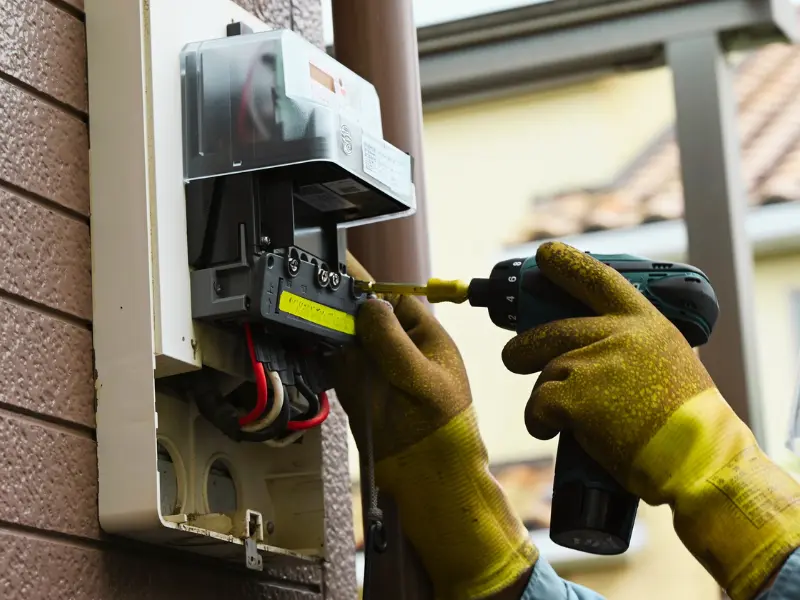
3. Meter Base and Pole Installation
Temporary power poles are self-contained services erected with an outdoor weather-resistant meter service panel. Once the pole is securely installed, the electrical panels are attached and equipped with GFCI protection for all circuits, whether overhead or underground.
Key components of the meter base setup include:
- Weatherproof meter socket
- Main circuit breaker panel
- Grounding rod and conductor
- Protective conduit and service entrance cables
Temporary service poles must be grounded using an 8-foot ground rod, with the grounding conductor properly terminated on the neutral bus in the meter socket.
4. Inspection and Power Activation
Before the temporary electrical meter can be energized, it must pass inspection by the local authority having jurisdiction. The inspector will affix an approval sticker on the panel, giving the utility company the notification needed to proceed. The utility company typically comes out within a week of approval to make final connections and activate power.
How Long Does the Process Take?
Timeline is one of the most important factors for builders and home buyers to plan around. Getting temporary power to a construction site is an involved process that can take anywhere from 1 to 8 months, depending on the local utility company, municipality, and permitting authority. Starting early is not optional; it is essential.
Reliable Wire Electric streamlines this process by handling permits, utility coordination, and inspections on your behalf, minimizing delays from day one.
Safety Standards to Know
A temporary electrical meter installation must adhere to strict safety and code requirements under the National Electrical Code (NEC). Key measures include GFCI protection on all circuits to reduce shock risk, weatherproof enclosures rated for outdoor use, proper grounding with a minimum 8-foot ground rod, secure mounting to prevent tipping, shifting, or storm damage, and clearly labeled breakers for all connected circuits.
Most utility companies also require a minimum 3-foot separation between natural gas and electric facilities, and meter locations must be free from excessive moisture, vibrations, and heat. Skipping or cutting corners on any of these requirements can lead to failed inspections, project shutdowns, or serious on-site hazards.
Transitioning to Permanent Electrical Service
Once construction is complete, transitioning from temporary to permanent power is straightforward. The utility company reads the temporary meter, issues a final bill for electricity used during construction, and closes the temporary account. The permanent installation then takes over, which involves installing a new meter base and main electrical panel, running service entrance conductors from the utility connection, completing the final electrical inspection, and activating permanent service.
It’s important not to wait until the electrical rough-in phase to apply for permanent power, as this common mistake can cause delays of several weeks. Reliable Wire Electric recommends applying for both temporary and permanent service at the start of your project to ensure everything stays on schedule.
Cost Factors
The cost of a temporary electrical meter setup in Missouri depends on several factors, including the distance from the nearest utility connection, site accessibility and ground conditions, permit and inspection fees, and equipment such as panel size, conduit type, and grounding materials. Duration of use and any required extensions also affect the total cost. Some utility providers offer flat-rate temporary service packages that include installation, energy usage, and removal for a set period, simplifying budgeting for smaller residential builds. Reliable Wire Electric provides transparent, itemized quotes so you know exactly what you are paying for before any work begins.
Why Work with Reliable Wire Electric?
Temporary electrical systems involve multiple layers of coordination including permits, utility approvals, inspections, and NEC compliance, all before a single tool is plugged in. Our licensed electricians manage every step of the process, ensuring your site has safe, reliable power from day one.
When you work with Reliable Wire Electric for your Missouri project, you get experienced professionals who understand local utility requirements, keep your timeline on track, and deliver fully code-compliant installations every time.
FAQs
1. What is a temporary electrical meter?
A temporary meter provides short-term power for construction or renovations before permanent service is installed.
2. Who can install it in Missouri?
Only licensed electricians or utility-approved contractors can install a temporary meter safely and legally.
3. How long can it be used?
Typically, temporary meters are allowed for 6–12 months, depending on utility rules and project progress.
4. What’s the cost?
Fees vary by utility and meter size but usually include a deposit, meter rental, and usage charges.
5. Do I need inspection?
Yes, most Missouri utilities require an inspection before activation to ensure safety and code compliance.