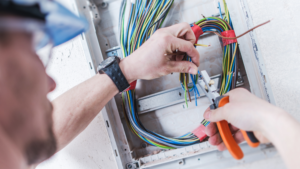
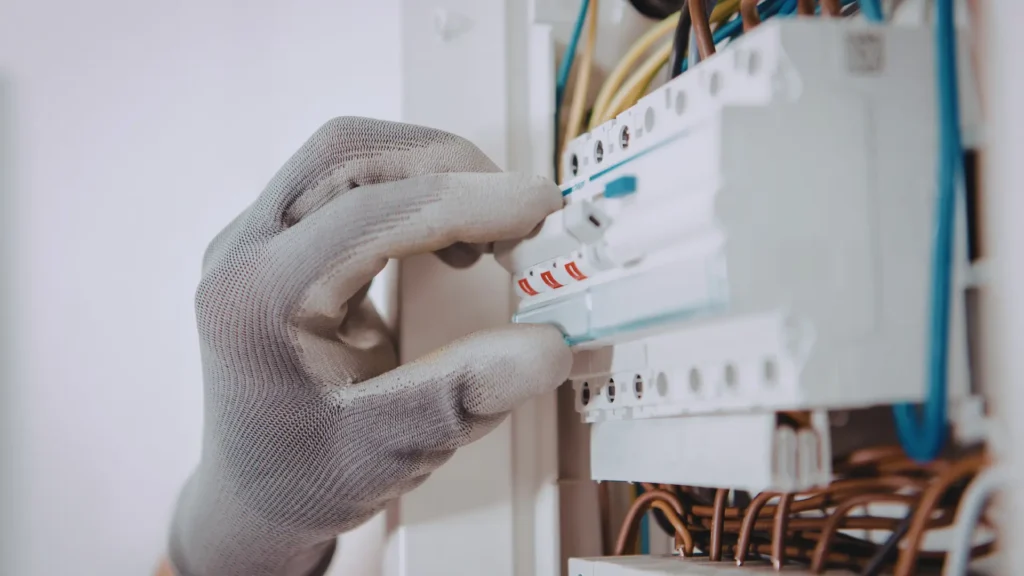
GFCI breaker installation is one of the most important electrical upgrades a homeowner can make to protect their family from shock, electrocution, and electrical fires. Many homeowners only think about GFCI protection after a close call near water or after a home inspection flags their panel as non-compliant. By understanding what GFCI breakers do, where they are required, and how the installation process works, you can make informed decisions, work confidently with licensed electricians, and avoid the costly mistakes that come from acting too late. This guide walks you through everything you need to know.
What is GFCI Breaker Installation? (The Simple Definition)
GFCI breaker installation is the process of replacing a standard circuit breaker in your electrical panel with a Ground Fault Circuit Interrupter breaker. A GFCI breaker monitors the flow of electricity through a circuit and trips within 1/40th of a second when it detects even a small imbalance caused by current leaking to ground, such as through a person’s body.
Unlike a standard GFCI outlet that protects only the devices plugged into it, a GFCI breaker protects every outlet, fixture, and appliance on the entire circuit it controls from the panel level outward.
GFCI Breaker vs. GFCI Outlet vs. Standard Breaker
| Protection Type | Location | What It Protects | Best Used For |
|---|---|---|---|
| Standard breaker | Panel | Overloads and short circuits only | General interior circuits |
| GFCI outlet | Wall receptacle | That outlet and the downstream outlets | Single-room protection |
| GFCI breaker | Panel | Entire circuit from panel outward | Whole-circuit protection |
| AFCI breaker | Panel | Arc faults and fire risk | Bedrooms, living areas |
| GFCI/AFCI combo breaker | Panel | Ground faults and arc faults | Modern code-compliant installs |
A GFCI breaker is the most comprehensive level of ground fault protection available for a single circuit.
Why GFCI Breaker Installation Matters (The Real Cost Breakdown)
The Price of Skipping GFCI Protection
| Risk or Damage Scenario | Estimated Cost | Root Cause |
|---|---|---|
| Electrical fire damage (minor) | $8,000 to $25,000 | Undetected ground fault igniting materials |
| Failed home inspection | $500 to $2,000 | Non-compliant panel requiring corrections |
| Emergency electrician call | $300 to $800 | Nuisance trip or wiring fault diagnosis |
| Personal injury liability | $50,000 or more | Shock injury to a guest or family member |
| Full panel upgrade (delayed) | $3,000 to $8,000 | Ignored compliance issues compounding |
A single GFCI breaker costs between $40 and $100 for the part, with professional installation typically running $100 to $300 per breaker. That investment is a fraction of what unprotected circuits can cost when something goes wrong.
NEC Code Requirements That Drive GFCI Installation
The National Electrical Code (NEC) has expanded GFCI requirements with every major update. As of the 2023 NEC, GFCI protection is required for circuits serving bathrooms, kitchens, garages, crawl spaces, unfinished basements, outdoor receptacles, boat docks, pool and spa equipment, rooftop receptacles, and any receptacle within 6 feet of a sink. Older homes built before these requirements became law are not automatically grandfathered to safety. Most home sales, refinances, and renovation permits now trigger an inspection that flags non-compliant circuits.
Types of GFCI Breakers: Know Your Options First
Different electrical panels and circuit needs call for different GFCI breaker types, and identifying the right one before purchasing is essential. Standard GFCI breakers provide ground fault protection only and are the most straightforward replacement for a single-pole breaker on a 15 or 20-amp circuit. These are suitable for most bathroom, garage, and outdoor circuits in older homes.
Combination GFCI/AFCI breakers protect against both ground faults and arc faults in a single device. They are now required by the 2020 and 2023 NEC in nearly all living spaces and are the modern standard for new construction and renovation work. Double-pole GFCI breakers protect 240-volt circuits such as those serving hot tubs, spas, pool pumps, and some HVAC equipment. They occupy two slots in the panel and are larger and more expensive than single-pole versions.
Tandem or slim GFCI breakers are designed to fit two breakers in a single panel slot, making them useful in full panels where additional slots are not available. Not all panels accept tandem breakers, so compatibility must be confirmed before purchase. Plug-on neutral GFCI breakers feature a built-in neutral wire connection that snaps directly onto a bus bar in compatible panels, eliminating the need for a separate pigtail wire. They are faster to install and increasingly common in newer panels from major manufacturers.
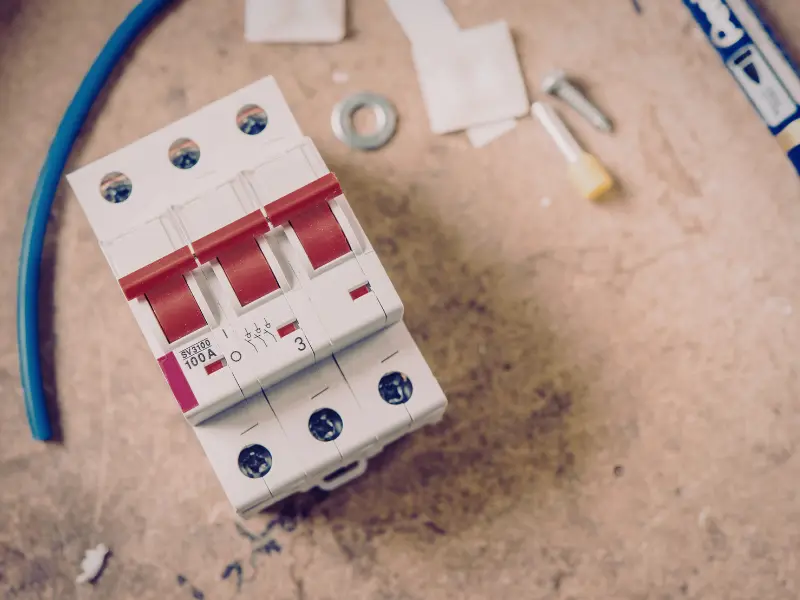
Step-by-Step Overview of GFCI Breaker Installation
Understanding the installation process helps you supervise professional work and know what to expect during the job.
Step 1: Turn off the main breaker. Before any work inside the panel begins, the main breaker must be shut off to de-energize the bus bars. Note that the service entrance wires feeding into the top of the panel remain live even with the main breaker off, and only a licensed electrician should work near them.
Step 2: Remove the panel cover. The cover plate is removed to expose the breaker slots, wiring, and bus bars. A qualified electrician will visually inspect for any signs of overheating, corrosion, or improper wiring at this stage.
Step 3: Remove the existing standard breaker. The old breaker is disconnected from the hot wire, and the breaker is unclipped from the bus bar. The neutral wire connected to the neutral bus bar is also noted for reassignment.
Step 4: Connect the GFCI breaker. The GFCI breaker has two wires of its own: a white curled pigtail (neutral) and the breaker body itself. The circuit’s hot (black) wire connects to the breaker’s load terminal. The circuit’s neutral (white) wire connects to the breaker’s neutral terminal, not the neutral bus bar. The GFCI’s white pigtail connects to the neutral bus bar.
Step 5: Snap the breaker into the panel. The breaker clips onto the hot bus bar and is seated firmly in its slot.
Step 6: Test the breaker. Power is restored, and the GFCI breaker’s test button is pressed to confirm it trips correctly. The reset button is then pressed to restore the circuit.
Installation Time Reference
| Scenario | Estimated Time | Notes |
|---|---|---|
| Single GFCI breaker swap | 30 to 60 minutes | Straightforward replacement |
| Multiple breakers (3 to 5) | 2 to 4 hours | Panel inspection included |
| Full panel GFCI upgrade | 4 to 8 hours | All circuits assessed and updated |
| Panel with wiring issues | Add 1 to 3 hours | Correction of existing problems |
Common GFCI Breaker Installation Mistakes to Avoid
Connecting the circuit neutral to the neutral bus bar instead of the breaker’s own neutral terminal is the single most common wiring error in GFCI breaker installation. This mistake causes the breaker to trip immediately and continuously, with no obvious explanation until the wiring is traced back. Buying a GFCI breaker that is not compatible with your panel brand is another frequent problem. Most GFCI breakers are brand-specific and will not seat correctly or make proper contact on a bus bar they were not designed for. Always confirm your panel manufacturer and model before purchasing.
Skipping the self-test after installation leaves you with no confirmation that the ground fault detection circuit is functioning. Always press the test and reset buttons before calling the job complete. Installing a GFCI breaker on a circuit shared with another panel, called a multi-wire branch circuit, requires special handling and a double-pole GFCI breaker to avoid nuisance tripping.
Attempting GFCI breaker installation without turning off the main breaker or working near the service entrance wires at the top of the panel is an extremely dangerous error that should never occur. Only licensed electricians should work inside a live panel.
GFCI Breaker Performance Over Time: What to Expect
GFCI breakers are not maintenance-free, nd their performance changes over the years. Breakers 0 to 5 years old can experience nuisance tripping due to long wire runs, old or deteriorated wiring, or moisture intrusion in outdoor or garage circuits. Between 5 and 10 years, the test-and-reset mechanism should still function reliably, but monthly self-testing is recommended to confirm the trip function is still active. At 10 to 15 years, the internal sensing circuitry can begin to degrade, leading to either failure to trip on a genuine fault or increasingly frequent nuisance trips on normal loads.
Between 15 and 20 years, GFCI breakers are approaching the end of their reliable service life. Even if they appear to function normally, the ground fault sensing circuit may no longer be calibrated accurately. Over the past 20 years, replacement is strongly recommended regardless of outward appearance. A GFCI breaker that fails to trip during testing must be replaced immediately, as it provides no actual protection while appearing operational.
Technology Tools That Support GFCI Breaker Work
Modern tools make it easier to assess your panel’s GFCI compliance and the performance of installed breakers. Plug-in circuit analyzers with GFCI test buttons let homeowners test any outlet on a circuit for proper wiring polarity and confirm that the GFCI breaker upstream is responding correctly. Non-contact voltage testers allow safe confirmation that a circuit is de-energized before any work begins, without touching any wires or terminals.
Clamp meters measure current flow in conductors and can help electricians identify the ground fault that is causing a GFCI breaker to trip repeatedly. Panel labeling apps allow homeowners to map every circuit in their panel with photos and notes, making future GFCI upgrades faster and more targeted. Thermal imaging cameras, when used by a licensed electrician during panel inspection, can identify hotspots from loose connections or overloaded conductors that should be addressed alongside any GFCI upgrade.
DIY Inspection vs. Professional Installation: Know the Difference
Homeowners can safely test existing GFCI breakers using the test and reset buttons, inspect outlets downstream of a GFCI breaker for proper response, and use plug-in circuit analyzers to check wiring polarity and ground fault response at receptacles. These tasks require no opening of the electrical panel.
However, all work inside the electrical panel, including removing, replacing, or adding breakers, should be performed by a licensed electrician. Electrical panels contain bus bars and service entrance wires that remain energized even when the main breaker is off, and contact with them is immediately life-threatening. Many jurisdictions also require a permit and inspection for panel work, meaning unlicensed DIY installation could create code violations that complicate a future home sale.
GFCI breakers should be self-tested monthly and professionally inspected every 10 years or whenever a nuisance tripping pattern develops. If a GFCI breaker fails to trip when the test button is pressed, fails to reset after tripping, or trips on a circuit with no apparent fault, schedule a professional assessment promptly. These are red flags that the breaker itself or the circuit wiring requires immediate attention.
Final Thoughts
GFCI breaker installation is not a task to postpone or overlook. A single unprotected circuit near water, a pool, or a garage can put every person in your home at risk every day it goes unaddressed. For $150 to $400 per circuit installed professionally, it is among the highest-value electrical upgrades available. Test your existing GFCI breakers today, confirm your panel meets current NEC requirements, and schedule a licensed electrician for any circuits that are missing this critical layer of protection.
FAQs
1. What is a GFCI breaker Setup and is it different from a GFCI outlet?
A: GFCI breaker Setup places ground fault protection at the panel level, protecting every outlet and fixture on that entire circuit. A GFCI outlet only protects that receptacle and any outlets wired downstream of it.
2. How much does GFCI breaker installation cost?
A: The breaker itself costs $40 to $100, depending on type. Professional installation adds $100 to $300 per breaker, making the full cost per circuit $150 to $400 in most markets.
3. Can I install a GFCI breaker myself?
A: Testing and resetting existing GFCI breakers is safe for homeowners. Replacing or installing breakers inside the panel requires a licensed electrician due to live service entrance wires and local permit requirements.
Q: How do I know if my GFCI breaker is working properly?
A: Press the test button monthly. The breaker should trip immediately, cutting power to the circuit. Press the reset button to restore power. If it does not trip or will not reset, replace it immediately.
Q: How long do GFCI breakers last?
A: Most GFCI breakers have a reliable service life of 10 to 15 years. Monthly self-testing helps confirm function, but any breaker older than 15 to 20 years should be proactively replaced regardless of apparent performance.