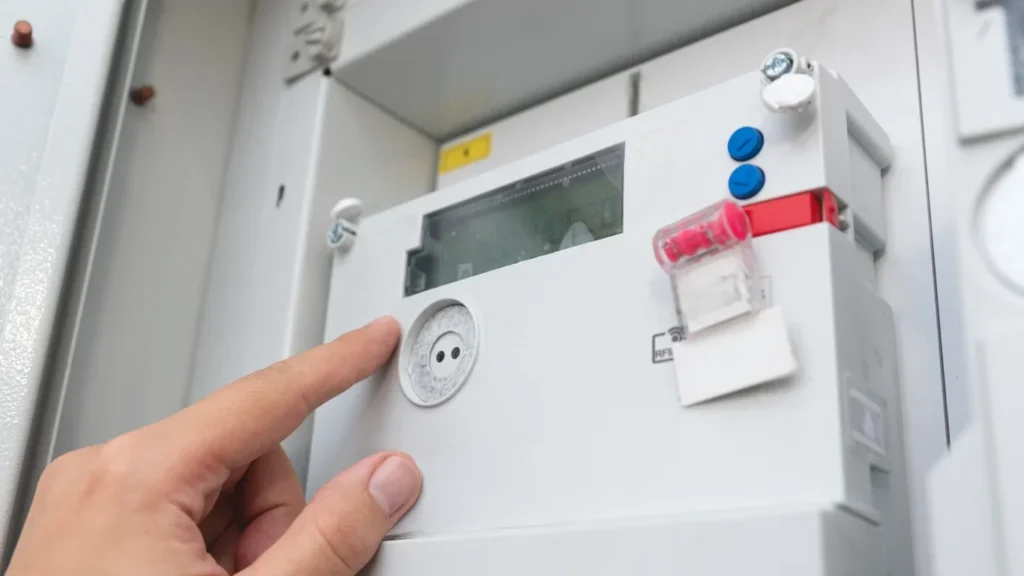
A commercial electrical meter is the device your utility provider uses to measure and record how much electricity your business consumes. Unlike a standard residential meter, it is engineered to handle higher loads, track demand charges, and often support a multi-phase power supply. Getting the right meter in place is not just about accurate billing — it directly affects how well you can manage energy costs, meet regulatory requirements, and plan for business growth.
How a Commercial Electrical Meter Works
At its core, a commercial electrical meter measures electricity in kilowatt-hours (kWh). However, commercial meters go beyond simple consumption tracking. They also measure demand — the peak amount of power drawn during any given period, typically measured in kilowatt-amperes (kVA). This is why commercial billing looks different from a home electricity bill: businesses are charged both for how much energy they use and for the highest rate at which they draw it.
Most large commercial sites use transformer-rated meters, which require Current Transformers (CT) and Potential Transformers (PT) to step down high current and voltage to safe, measurable levels. The meter only reads a fraction of actual consumption, and a billing multiplier is applied to calculate the real figure. Smaller businesses may use self-contained meters that handle lower loads directly without transformers.
Types of Business Electricity Meter
Choosing the wrong meter type leads to inaccurate billing and missed energy-saving opportunities. Here is a breakdown of the main options:
| Meter Type | Best For | Key Feature |
|---|---|---|
| Standard (Single-Rate) | Small businesses, low usage | Fixed unit rate; manual reading required |
| Smart Meter | Most commercial properties | Auto-sends readings; most popular type |
| Half-Hourly (HH) Meter | High-consumption businesses | Sends data every 30 minutes; legally required above 100kW demand |
| Time-of-Use (Multi-Rate) | Businesses with flexible hours | Cheaper off-peak rates (evenings, weekends) |
| Prepayment Meter | Budget-conscious operators | Pay-before-use with a top-up credit system |
| Submeter | Multi-tenant buildings, large sites | Tracks individual unit or floor consumption |
Smart meters are currently the most widely installed type of commercial meter. They transmit usage data automatically to your supplier, eliminating estimated bills and making it easier to spot consumption patterns.
Half-hourly meters are a legal requirement for any business whose peak demand in any 30-minute window exceeds 100kW. They send granular consumption data every 30 minutes, enabling businesses and suppliers to negotiate more tailored energy contracts.
Commercial vs. Residential Electrical Meter: Key Differences
Understanding what separates commercial meters from residential ones helps explain why setup, cost, and billing are all handled differently.
A residential meter tracks energy use for a single household — it measures kilowatt-hours, and the bill is calculated at a flat per-unit rate. A commercial electrical meter, by contrast, tracks both consumption and demand, often across a three-phase power supply. Commercial meters are generally larger, read remotely rather than manually, and are typically located near the building entrance rather than outside a home’s service panel.
The billing logic is also fundamentally different. Residential customers pay for what they use. Commercial customers also pay for the maximum rate at which they use it — even if that peak demand lasted only minutes during the billing cycle.
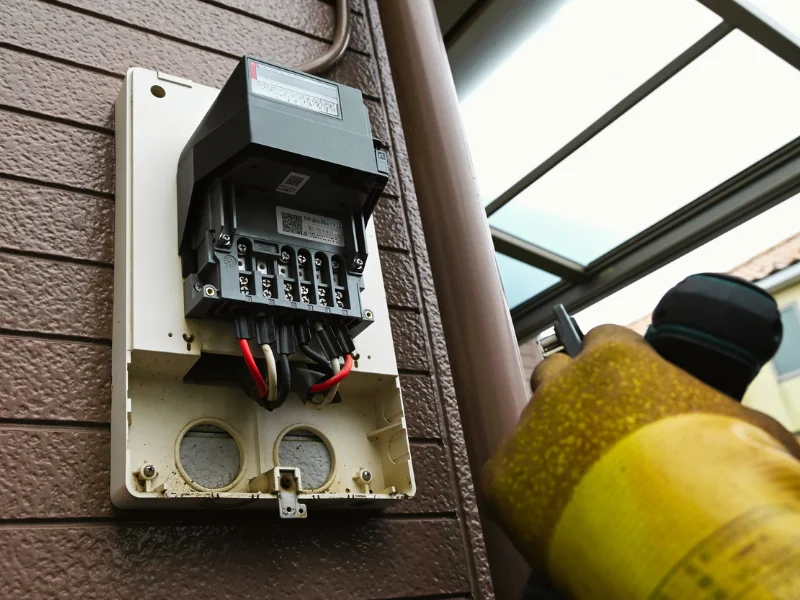
Commercial Electrical Meter Installation: What to Expect
Before arranging installation, you will need your Meter Point Administration Number (MPAN) — a unique identifier for your electricity supply point. You can find it on a recent energy bill. If your premises have no existing connection, your Distribution Network Operator (DNO) creates the connection and issues the MPAN.
For businesses with a half-hourly meter, it is a legal requirement to appoint a Meter Operator (MOP), who handles maintenance, fault resolution, and the telecoms infrastructure that relays your consumption data to your supplier.
Installation timelines vary. A standard or smart meter typically takes 30 minutes to 2 hours. Multiple meters or a brand-new supply connection can take several weeks or even up to 3 months, so planning well ahead is essential.
Smart meter installation is usually free of charge. Other meter types may involve a negotiable fee — never accept the first quote from your supplier without pushback.
Cost of a Business Electricity Meter
Costs vary depending on meter type, site complexity, and region. The table below gives a general range:
| Meter Type | Approximate Cost (USD) |
|---|---|
| Smart meter (commercial) | Often free via the supplier |
| 3-phase revenue-grade meter (hardware) | $200 – $1,200+ |
| Time-of-use / interval meter | $300 – $1,500 |
| Submeter | $50 – $700 |
| Complex commercial installation (all-in) | $600 – $2,000+ |
| Meter socket or panel upgrade | $150 – $1,500+ |
Installation costs are typically negotiable. If your supplier charges for installation, compare quotes and ask for a reduction — especially if you are switching energy contracts at the same time.
How to Choose the Right Meter for Your Business
The right business electricity meter depends on three factors: your energy volume, your usage pattern, and whether you operate across multiple sites or tenants.
For small offices and retail units with predictable daytime usage, a smart single-rate meter is usually sufficient. If your business runs overnight processes or uses energy heavily during off-peak hours, a time-of-use meter with cheaper overnight rates could reduce costs meaningfully. Large manufacturers, data centres, or warehouses that regularly draw above 70kW should evaluate a half-hourly meter and consider whether submetering individual circuits or floors would deliver even better cost control.
If you manage a commercial property with multiple tenants, submetering is the most effective way to bill each occupant fairly for their actual consumption — it also supports ESG reporting and qualifies for energy management incentive programs in many jurisdictions.
Frequently Asked Questions
1. What is a commercial electrical meter used for?
It measures a business’s electricity consumption and peak demand so the utility can accurately calculate billing, including both energy-use charges and demand charges.
2. How is a commercial meter different from a residential meter?
Commercial meters measure demand (kVA) in addition to consumption (kWh), handle higher loads, often use three-phase power, and are typically read remotely rather than manually.
3. Do I need a half-hourly meter for my business?
If your peak electricity demand exceeds 100kW in any 30-minute window, a half-hourly meter is a legal requirement. Businesses between 70kW and 100kW are encouraged to consider one.
4. How long does commercial electrical meter installation take?
A standard or smart meter installation usually takes 30 minutes to 2 hours. New supply connections or multi-meter sites can take several weeks or up to 3 months.
5. Can I reduce my energy bill by switching meter types?
Yes. Upgrading to a smart or time-of-use meter gives you accurate consumption data, eliminates estimated bills, and can unlock cheaper off-peak tariffs — all of which help reduce overall energy spend.