
When most people evaluate a kitchen, they look at cabinet space, countertop materials, and appliance brands. What rarely gets the attention it deserves is the electrical system behind it all. A kitchen without properly planned kitchen electrical outlets is like a workspace without enough tools. Everything looks fine until you actually try to use it, and then the frustration starts.
At Reliable Wire Electric, we help home buyers and homeowners across Missouri understand what good kitchen electrical planning actually looks like, what the current codes require, and what to look for when evaluating any property. This guide covers everything from countertop outlet spacing to dedicated circuits, GFCI protection, and modern features worth building in from the start.
Why Kitchen Electrical Outlets Deserve More Attention
The kitchen is the most power-intensive room in any home. Between coffee makers, air fryers, blenders, instant pots, charging devices, under-cabinet lighting, and major appliances, the demand on the electrical system is constant and diverse. When kitchen electrical outlets are poorly placed, too few in number, or missing proper protection, the result is overloaded circuits, reliance on extension cords, safety hazards, and eventually costly repairs.
For home buyers, evaluating the outlet situation in a kitchen is one of the most practical things you can do during a property walkthrough. It tells you a great deal about whether the kitchen was designed by someone who understood how people actually cook and live.
What Current Code Requires for Countertop Outlets
The National Electrical Code sets specific requirements for how kitchen electrical outlets must be distributed across countertop surfaces. Under NEC Section 210.52(C), no point along a countertop wall should be more than 24 inches from a receptacle outlet, which in practice means outlets are spaced no more than 48 inches apart. Any countertop section that is 12 inches wide or greater requires at least one receptacle.
Outlets must also be positioned no higher than 20 inches above the countertop surface. This ensures appliances can be plugged in without cords stretched awkwardly or hanging dangerously over the edge of the counter.
Countertop sections separated by a range, sink, or refrigerator are treated as separate counter spaces, each requiring their own outlet coverage. This rule prevents large dead zones in kitchen layouts where appliances make it seem like one long countertop is actually divided into smaller usable segments.
Island and Peninsula Outlets Under the 2023 NEC
The 2023 edition of the National Electrical Code introduced meaningful changes to how kitchen electrical outlets are handled on islands and peninsulas. Under previous versions of the code, outlets were required based on countertop square footage. The 2023 NEC removed that mandate entirely.
Islands and peninsulas no longer automatically require a receptacle outlet. However, there is an important condition attached to that flexibility. If no outlet is installed, provisions must still be made for future installation. This typically means running wiring to a junction box inside the cabinet so an outlet can be added later without demolishing finished surfaces.
If outlets are installed, placement rules are strict and different from what many older kitchens reflect:
| Placement Location | Permitted Under 2023 NEC | Notes |
|---|---|---|
| On or above the countertop surface | Yes | Maximum 20 inches above the surface |
| Built into the countertop | Yes | Must use listed countertop receptacle assembly |
| Side of cabinetry below countertop | No | Eliminated due to documented injury risk |
| Pop-up outlets in the countertop surface | Yes | Must be listed for countertop installation |
| USB-only in-drawer charging outlets | Yes | Not classified as receptacle outlets under NEC |
Side-mounted below-counter outlets were eliminated because of widespread documented injuries, particularly to children who caught appliance cords while walking by. This is now treated as a safety defect during home inspections regardless of when the outlet was originally installed. Home buyers evaluating older kitchens should watch for this configuration specifically.
It is also worth confirming which NEC edition your jurisdiction currently enforces. Many areas still follow the 2020 edition, which has different requirements. A licensed electrician familiar with local adoption status is the best person to clarify this before any renovation or purchase decision.
GFCI and AFCI Protection Requirements
All kitchen electrical outlets that serve countertop surfaces, whether on walls, islands, or peninsulas, require GFCI protection. Ground Fault Circuit Interrupter protection cuts power instantly when it detects an electrical fault, dramatically reducing the risk of shock in an environment where water and electricity are constantly in close proximity.
The 2023 NEC also requires AFCI protection on kitchen outlets. Arc Fault Circuit Interrupter protection detects dangerous electrical arcing that can cause fires even when a circuit is not overloaded. Together, GFCI and AFCI protection represent the current standard for safe kitchen electrical installations.
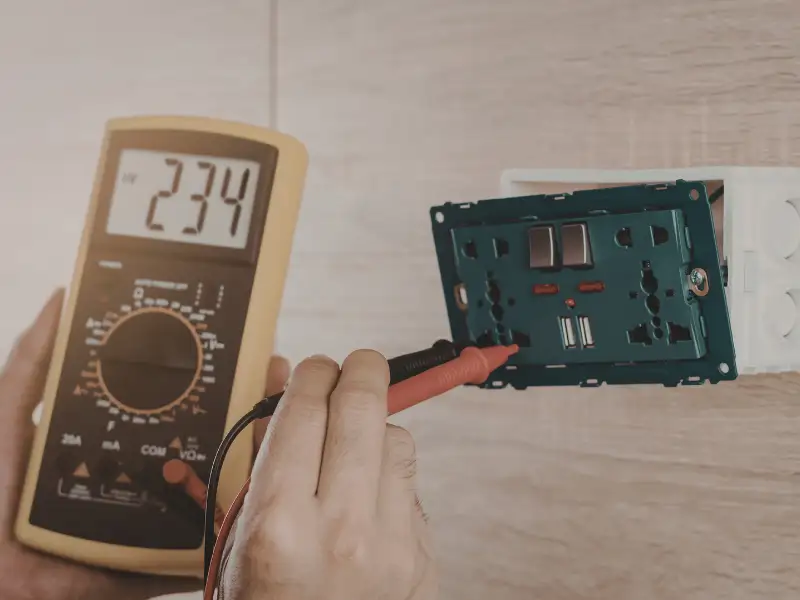
During any property inspection, it is worth testing GFCI outlets using the test and reset buttons on the outlet face. A non-responsive GFCI outlet should be treated as a safety concern that requires immediate attention.
Dedicated Circuits for Major Appliances
General countertop kitchen electrical outlets share circuits with other receptacles, but major appliances require their own dedicated circuits to operate safely. A dedicated circuit connects directly from the appliance to the electrical panel without sharing capacity with anything else.
Appliances that typically require dedicated circuits include refrigerators, dishwashers, built-in microwaves, electric ranges, wall ovens, and garbage disposals. Running a high-draw appliance on a shared circuit is one of the most common causes of tripped breakers, and over time it can degrade wiring and pose a fire risk.
For home buyers, finding out whether dedicated circuits exist for each major appliance is one of the most important electrical questions to ask during due diligence. If the panel does not have enough circuits to support dedicated connections for all appliances, upgrades will be needed after purchase.
Small Appliance Branch Circuits
Beyond individual appliance circuits, the NEC requires at least two 20-amp small appliance branch circuits specifically dedicated to serving kitchen countertop receptacles. These circuits must serve the kitchen, pantry, breakfast room, and similar areas, and they cannot serve outlets in other rooms or be used for lighting.
This means a properly wired kitchen will have separate 20-amp circuits feeding the countertop outlets so that plugging in a toaster and a coffee maker at the same time does not trip a breaker. In older homes, this requirement is frequently not met, and homeowners who have experienced chronic tripped breakers in the kitchen are often dealing with this exact problem.
Modern Features Worth Planning For
The best time to upgrade kitchen electrical outlets is during a renovation or new build, before walls and cabinets are finished. Features that are simple to include during rough-in become expensive to add after the fact.
Modern options worth considering include USB and USB-C charging outlets built directly into the backsplash or countertop, eliminating the need for adapters and reducing outlet competition. Tamper-resistant receptacles are now required by code in new installations and add a meaningful layer of safety in homes with children. Smart outlets with individual circuit monitoring allow homeowners to track energy use by appliance. Pop-up countertop receptacles offer a clean aesthetic while keeping full outlet functionality available when needed.
Planning these features early ensures cleaner installation, better placement, and a kitchen that meets both current and future electrical demands.
New Construction vs. Existing Homes
In a new build, kitchen electrical outlets can be positioned exactly where they are most useful before any drywall, cabinets, or countertops go in. This allows electricians to run clean, code-compliant circuits without constraints and gives designers full flexibility in outlet type and location.
In an existing home, upgrading or adding outlets requires running new wire through finished walls, floors, or cabinetry. It is more labor-intensive but absolutely achievable with experienced electricians. The result is a kitchen that performs to modern standards without the workarounds that come from an underpowered or outdated system. Reliable Wire Electric handles both new construction and retrofit upgrades across Missouri, including permit coordination and inspection.
Why Reliable Wire Electric
Our team understands Missouri’s local code adoption status, utility requirements, and what inspectors look for in kitchen electrical work. We bring that knowledge to every job, whether it is a full kitchen remodel, a panel upgrade to support new appliances, or a straightforward outlet addition. We provide clear estimates before work begins and handle everything from the permit application to the final inspection.
FAQs
1. Where should kitchen outlets be placed?
Outlets must be on or above countertops, within 24 inches of each side of sinks, and no more than 20 inches above the counter.
2. Are outlets required on kitchen islands or peninsulas?
Yes, islands and peninsulas must have at least one outlet if the countertop space is 24 inches or more.
3. Do all countertop outlets need GFCI protection?
Yes. All kitchen countertop outlets must have GFCI protection to reduce the risk of electric shock.
4. Can I put outlets under cabinets or below counters?
No. Outlets below counters or cabinets are generally not allowed for countertop use, per NEC guidelines.
5. How many circuits are needed for kitchen outlets?
Countertop outlets require at least two 20-amp circuits for safety, plus dedicated circuits for high-draw appliances.