Buying a new home is an exciting milestone, and one of the most important rooms to evaluate during that process is the kitchen. Beyond the finishes and fixtures, a home’s safety and efficiency depend heavily on the quality of its electrical system, especially for major appliances. Whether you’re purchasing a newly built home or an older property, understanding kitchen appliance wiring will help you ensure your space is functional, compliant, and ready for everyday use.
At Reliable Wire Electric, we’ve helped countless homeowners plan, upgrade, and troubleshoot their kitchen electrical systems. This guide explains what you need to know about kitchen appliance wiring, from circuit requirements to safety standards, so that you can make confident decisions as a new home buyer. Discover more on our Facebook Page.
Why Kitchen Appliance Wiring Matters
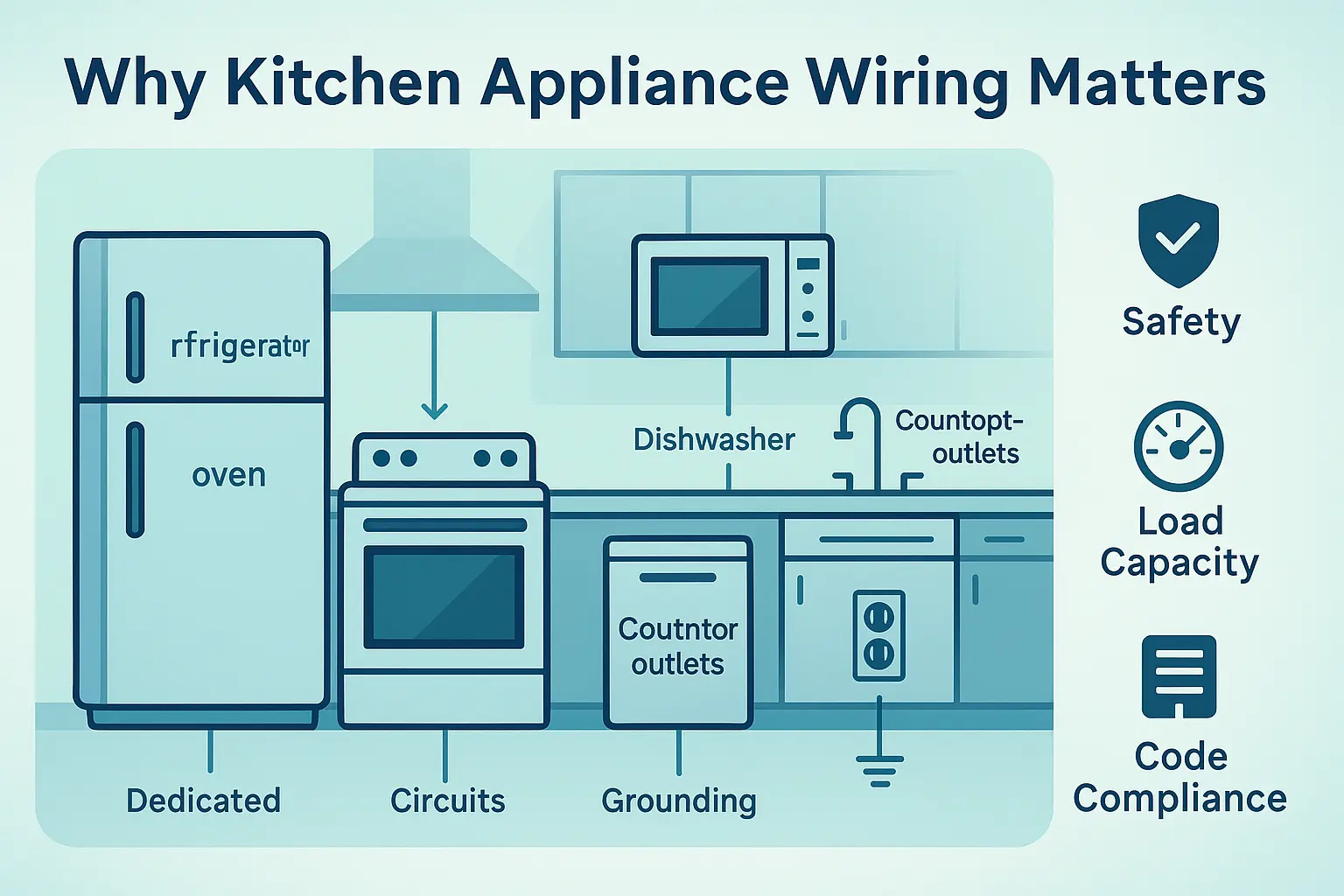
A kitchen uses more electricity than any other room in your home. From refrigerators and ovens to microwaves and dishwashers, every appliance depends on safe, properly designed wiring. When wiring is outdated or overloaded, it can lead to tripped breakers, poor appliance performance, or even serious fire risks.
For new homeowners, checking the quality of the kitchen’s wiring is essential. Proper wiring not only ensures safety but also supports long-term efficiency, protects your appliances, and keeps your home compliant with modern electrical codes.
The Basics of Kitchen Appliance Wiring
Kitchens are considered high-load areas under the National Electrical Code (NEC). That means each major appliance requires a dedicated circuit, sized appropriately for its voltage and amperage.
Typical includes:
- 240-volt circuits for large appliances like electric ranges and wall ovens.
- 120-volt circuits for smaller appliances such as microwaves, dishwashers, and garbage disposals.
- Multiple 20-amp circuits for countertop outlets to accommodate toasters, blenders, or coffee makers.
If you’re buying an older home, it’s worth asking your inspector or electrician whether the kitchen wiring has been updated to meet modern load requirements. Many older kitchens were designed for far fewer appliances than we use today.
Major Kitchen Appliances and Their Electrical Requirements
Every major appliance has specific wiring needs. Understanding these before moving into your new home ensures your kitchen can handle the electrical load safely.
Refrigerators
Most modern refrigerators require a 120-volt, 15- or 20-amp dedicated circuit. While small fridges can share a circuit, high-efficiency models should always have their own. Reliable kitchen appliance wiring helps prevent power fluctuations that can damage sensitive compressors.
Electric Ranges and Ovens
These heavy-duty appliances typically run on 240 volts and need a dedicated 40- to 50-amp circuit. The wiring must use the correct gauge wire (usually 6 or 8 AWG, depending on amperage). Gas ranges still need electrical connections for lights, timers, and igniters — generally a 120-volt, 15-amp line. Proper kitchen appliance wiring ensures these systems run safely and efficiently.
Dishwashers
Dishwashers typically require a 120-volt, 15- or 20-amp dedicated circuit. They must also be grounded and GFCI-protected under current electrical codes. This safeguard prevents shock hazards caused by moisture exposure.
Garbage Disposals
Disposals are usually hardwired or plugged into a 120-volt, 15-amp circuit controlled by a wall switch. When sharing a circuit with a dishwasher, wiring must be properly rated and protected. Reliable kitchen appliance wiring coordination keeps these two appliances running smoothly without overloading.
Microwaves
Over-the-range or built-in microwaves require their own dedicated 120-volt, 20-amp circuit. Countertop units can share small appliance circuits, but dedicated wiring prevents nuisance tripping, especially if used frequently.
Range Hoods and Ventilation Systems
While range hoods draw less power, they still need safe electrical connections. A 120-volt circuit with grounding is standard. Correct kitchen appliance wiring ensures fans and lighting operate reliably without interference.
Countertop Outlets
The NEC requires at least two 20-amp small appliance branch circuits for countertop outlets. These circuits must be GFCI-protected and spaced no more than four feet apart to accommodate everyday cooking tools. This rule prevents homeowners from overloading a single outlet and helps maintain consistent kitchen safety.
GFCI and AFCI Protection
Two important safety devices play a vital role in Kitchen wiring for appliances: Ground Fault Circuit Interrupters (GFCIs) and Arc Fault Circuit Interrupters (AFCIs).
GFCIs shut off power if they detect current flowing through water or an unintended path, protecting against electric shock, a must-have in any kitchen where moisture is present.
AFCIs detect dangerous arcing that could lead to electrical fires. Most modern building codes now require AFCI protection in kitchen circuits.
Before finalizing your home purchase, confirm that these protections are in place. If not, a licensed electrician can easily upgrade your system for compliance and peace of mind.
The Importance of Grounding
Every major appliance must be properly grounded to prevent electrical shock and equipment damage. In some older Louisiana homes, grounding may not meet current standards. Modern Kitchen wiring for appliances uses three-prong outlets and dedicated ground conductors to ensure safety.
If your new home still has two-prong receptacles or outdated aluminum wiring, it’s time to consider an electrical upgrade before installing new kitchen appliances.
Load Balancing and Circuit Capacity
Electrical load refers to how much power your circuits handle at once. If your refrigerator, microwave, and toaster run on the same 20-amp line, it’s likely to trip a breaker. Proper Kitchen wiring for appliances separates these loads to prevent overloads and power interruptions.
Balancing circuits not only protects appliances but also extends their lifespan by providing consistent voltage. Home buyers should always ask for an electrical panel review to confirm circuit allocation and available capacity before moving in.
Upgrading Kitchen Wiring in Older Homes
Many homes built before the 1990s were not designed for today’s power-hungry kitchens. They may lack grounding, have undersized wires, or rely on outdated fuse boxes instead of circuit breakers.
Reliable Wire Electric frequently upgrades older Kitchen wiring for appliance systems to meet current NEC standards. Upgrades can include:
- Adding dedicated circuits for heavy-load appliances.
- Installing GFCI and AFCI breakers.
- Replace aluminum wiring with copper conductors.
- Updating service panels for higher amperage capacity.
Even if the kitchen appears functional, outdated wiring can pose safety risks and limit the performance of modern appliances. A pre-purchase inspection can reveal these issues before they become expensive problems.
Hiring a Licensed Electrician for Appliance Wiring
While it might be tempting to handle small electrical tasks yourself, Kitchen wiring for appliances is best left to licensed professionals. Wiring errors can lead to safety hazards, code violations, and voided warranties on expensive appliances.
Reliable Wire Electric’s licensed electricians specialize in residential wiring projects, including complete kitchen installations and remodels. We ensure every connection meets code, is properly grounded, and safely supports your home’s electrical load.
Home buyers who schedule a professional inspection before closing can also save time and money by addressing wiring concerns before move-in day.
Key Takeaways for Home Buyers
- Every major appliance in the kitchen should have a dedicated circuit sized to its electrical load.
- GFCI and AFCI protection are required for most outlets to prevent shocks and fires.
- Grounding is essential for safe Kitchen wiring for appliances.
- Older homes often need electrical upgrades to meet modern safety codes.
- Always hire a licensed electrician to inspect and repair wiring issues before you move in.
- Understanding the basics of kitchen appliance wiring empowers home buyers to make informed decisions about their new property. A well-designed electrical system ensures efficiency, convenience, and most importantly, safety for years to come.
Final Thoughts
The kitchen is the heart of the home, and it deserves an electrical foundation built to handle modern demands. Whether you’re buying your first home or upgrading an existing one, investing in proper kitchen appliance wiring is one of the smartest steps you can take to protect your family and your investment.
At Reliable Wire Electric, we help home buyers throughout Louisiana plan, inspect, and upgrade their kitchen wiring for lasting safety and performance. From detailed circuit assessments to complete rewiring services, our team ensures your kitchen is code-compliant and ready for everyday living. Before you settle into your new home, contact Reliable Wire Electric to schedule a professional inspection. We’ll make sure your kitchen appliance wiring is safe, efficient, and built to support every meal, gathering, and memory your family creates in the years ahead.
Ready to make sure your kitchen is safe and fully up to code? Contact Reliable Wire Electric today for a professional wiring inspection and expert guidance before you move in.
FAQs
Do all major kitchen appliances need their own dedicated circuit?
Yes. Heavy-load appliances like ovens, microwaves, dishwashers, and refrigerators require dedicated circuits to prevent overloads and keep your electrical system safe.
How do I know if my new home’s kitchen wiring is up to code?
Have a licensed electrician inspect the panel, outlets, grounding, and circuit layout. They can confirm NEC compliance and spot hidden issues.
What is the difference between GFCI and AFCI protection?
GFCIs prevent shock hazards near water, while AFCIs detect electrical arcing that could start a fire. Modern kitchens need both for safety.
Should I upgrade wiring in an older home before installing new appliances?
Yes. Older wiring may lack grounding, proper amperage, or modern circuit protection. Upgrading ensures safety and prevents appliance damage.
Can I install or modify appliance wiring myself?
It’s not recommended. Incorrect wiring can cause fires, shocks, or code violations. Always use a licensed electrician for kitchen electrical work.